

Skip to content
INDUSTRIES

Low-code solutions custom built
for your industry.

Unique industry challenges require unique solutions. Discover how VeilSun can build a custom
low-code app to help solve your biggest headaches - in record time.

PLANNING & SCHEDULING

Planning Your Team Will Trust. Scheduling That Reflects Reality.

Custom planning and scheduling applications for operations leaders who are tired of running their business on disconnected spreadsheets, brittle Gantt charts, and tools nobody opens. We build systems that hold up — and with AI woven in, get smarter every cycle.

Why Stick With A Plan Nobody Trusts?

The schedule gets emailed out Monday morning. By Tuesday half of it is already wrong, and by Friday nobody's looking at it — the 'real' plan lives in someone's head, in a side spreadsheet, or in a Teams thread.

That’s not a planning failure. It’s an architecture failure — the data is too scattered and the updates are too slow for the schedule to ever reflect what’s happening in production.

Off-the-shelf scheduling tools don’t fix that. They just give you another tab nobody trusts.

Person typing on computer gantt chart

Planning & Scheduling Apps
Built for the Way You Work

We build planning and scheduling systems on Quickbase, Mendix, and full-stack platforms —
designed for the complexity your business runs on.

Show more

Already Built. Ready to Configure.

VeilSun has packaged years of planning and scheduling work into ready-to-deploy products on Quickbase. When the use case fits, you skip months of custom build and get to value faster.

QScheduler

Native Quickbase scheduling for resource-intensive operations. Eliminates the spreadsheet patchwork and gives schedulers a single, real-time view.

QLean / Digital Pull Planning

Lean construction planning, made digital. Replaces sticky-note pull planning sessions with a live, collaborative workflow your teams will open.

ConstructBase

A construction operations platform built on Quickbase, with planning, scheduling, and project management baked in.

Scheduling Is Where AI Pays for Itself.

Of all the operational AI use cases getting hyped right now, planning and scheduling is one of the few where the value is provable, immediate, and durable. Properly implemented, AI can:

  • Flag schedule risks before they become slippages, by reading patterns in your historical project data
  • Auto-populate planning records from emails, RFIs, and submittals — the way we did for Skinder Construction’s bid workflow, saving hundreds of hours per month
  • Surface dependency conflicts the human eye misses across a portfolio of fifty or more active projects
  • Translate field photos and reports into structured schedule updates without manual re-keying

This only works on a foundation that’s already clean. AI accelerates a planning system that has its data in order. It buries one that doesn’t.

That’s our methodology — Structure Before AI — and it’s why every planning engagement starts with an honest look at what your existing data architecture can support.

How We Think About Planning & Scheduling.

Three principles shape every planning and scheduling engagement we run.

1: ALIGNMENT IS EVERYTHING

A plan that doesn’t have buy-in across operations, finance, and the field isn’t a plan. It’s a document. We start by getting the right people in the room — and we don’t write a line of code until the priorities are clear.

2: ADAPTABILITY BEATS PRECISION

We design for the moment when something goes sideways — late deliveries, weather, a critical resource flagging out — and build planning systems that absorb the change without grinding to a halt.

03. INSIGHT OR IT DIDN'T HAPPEN

We build planning applications that surface what’s happening — bottlenecks, drift, capacity risk — at the moment a decision needs to be made, in the tool the decision-maker is already using.

How We Build Your Planning & Scheduling System

Every engagement starts with a Technology Blueprint — VeilSun’s proprietary discovery process for mapping your operation before we touch the build.

FIVE-STEP PROCESS

  1. Assess: We map your current planning workflows — the systems, the spreadsheets, the meetings, the workarounds. Reality first.
  2. Plan: We design the target state: what the planning system should do, who should see what, and where AI fits (or doesn’t).
  3. Execute: Our team builds the application on Quickbase, Mendix, or full-stack — whichever platform fits the operation, not the other way around.
  4. Monitor: We measure how the system is being used in production. Adoption is the only metric that matters.
  5. Refine: We optimize based on real-world feedback. Planning systems get sharper over time, not duller.
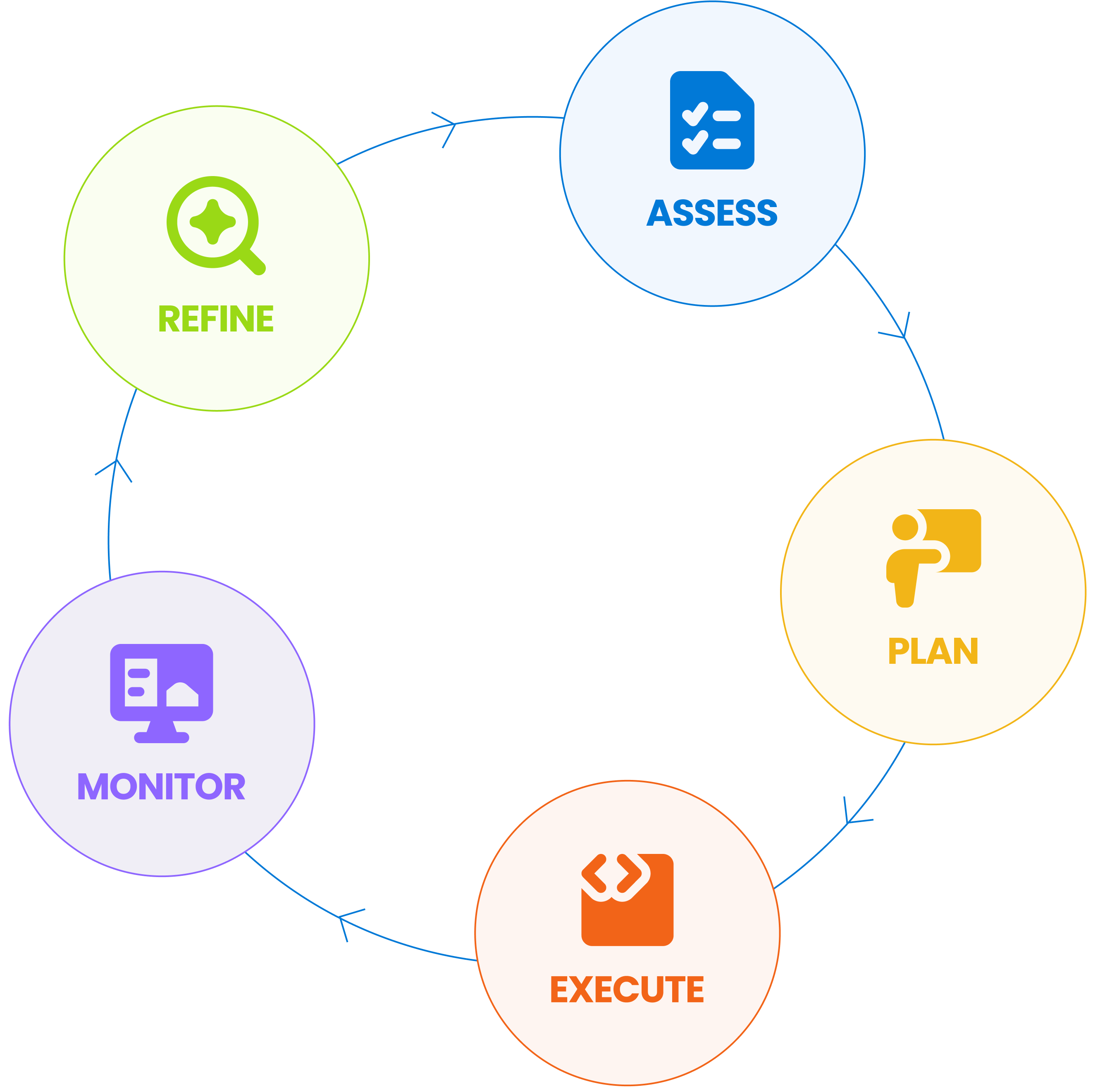

Planning scheduling solution development process cycle

five-stars

The Operations Teams Already Running on VeilSun-Built Schedules

Speech bubble icon

We contacted the VeilSun team to help us implement some much needed enhancements on our Facilitator Scheduling Tool, and through that process, we were educated on how much more functional and efficient our application could be! VeilSun has gone above and beyond our expectations to bring our application to a whole new level of efficiency."

Donna Worst, Fifth Third Bank

Why Operations Leaders Trust VeilSun with Planning and Scheduling

quickbase-orange

10+ YEARS

of Quickbase Elite Partner Excellence

smile-icon

99% HAPPINESS

and low-code development partner
of the year

desktop-icon

700+ PRODUCTS

We’ve deployed 700+ applications (and counting!)

trust-icon

∞ TRUST

Trusted by Google, Toyota, Lowes, and more

How to Start Your Planning & Scheduling Project

1
Schedule a Discovery Call
A 30-minute conversation about your operation, your current planning tools, and where the schedule is breaking down.
2
Get a Technology Blueprint
A custom plan for what your planning system should do, what to build first, and where the highest-ROI wins are.
3
Implement and Optimize
We build it. You start running on it. We refine it together.

Typing on laptop spreadsheet

Stop Running Your Operation on a Plan You Don’t Trust.

If the schedule on the wall doesn’t match what’s happening on the ground — and your team has stopped checking it — we should talk.

No pressure, no pitch. Just a conversation about what you’re trying to solve.

FAQ

What kinds of planning and scheduling problems does VeilSun solve?

We build custom and productized planning systems for operations leaders whose current tools — typically a mix of spreadsheets, off-the-shelf scheduling software, and project management platforms — can’t keep up with the complexity of their business. Our work spans project scheduling, portfolio management, resource planning, and lean construction planning.

What platforms does VeilSun build planning and scheduling apps on?

Quickbase is our primary platform for custom planning and scheduling work, with Mendix for more complex enterprise scenarios and full-stack development when integration depth requires it. We also extend Procore for construction clients who need to connect Procore project data into broader operational systems.

Does VeilSun offer pre-built planning and scheduling solutions?

Yes. QScheduler is a Quickbase-native scheduling product for resource-intensive operations. QLean / Digital Pull Planning replaces sticky-note pull planning with a digital, real-time workflow for lean construction. ConstructBase is a full construction operations platform that includes planning, scheduling, and project management.

How does VeilSun use AI in planning and scheduling applications?

We embed AI where it adds measurable value — flagging schedule risks before they become slippages, parsing unstructured data (emails, RFIs, submittals) into structured schedule records, and surfacing dependency conflicts across project portfolios. We don’t bolt AI onto unstable foundations; that’s why every engagement starts with an honest look at your existing data architecture.

Can your planning solutions integrate with our existing tools? Yes. Most of our planning and scheduling implementations are integration-heavy by design. We build connections to ERPs, CRMs, financial systems, field tools, and platforms like Procore so the planning system reflects what’s happening in production.
How long does a typical planning and scheduling implementation take? Most planning applications are live in weeks, not months — particularly when we’re starting from a productized solution like QScheduler or QLean. Custom builds depend on scope, but our typical range is six to twelve weeks from Technology Blueprint to production.
How does VeilSun keep planning and scheduling projects on time and on budget? Accordion description i

Have additional questions? Book a discovery call to discuss more.

Get in Touch